Banarta

Guides

XPS Foam Tile Backer Insulation Board

How to Evaluate a Foam Backer Board OEM Supplier for Private Label and Bulk Orders

Quick Answer for Buyers A strong foam backer board OEM supplier should prove repeatable production, stable specifications, export-ready packaging, private label support, and clear communication on MOQ, lead time, and certifications. Buyers should evaluate the factory as a long-term supply partner, not only a quote source. This guide is written for importers, contractors, distributors, OEM […]

How to Evaluate a Foam Backer Board OEM Supplier for Private Label and Bulk Orders Read More »

Cement Fiberglass Faced XPS Foam

Foam Backer Board Cost vs Cement Board for Importers and Contractors

Quick Answer for Buyers Foam backer board vs cement board should be evaluated by total installed cost, not board price alone. Importers and contractors should compare labor speed, freight weight, waterproofing workflow, breakage risk, and repeat supply stability before choosing the final sourcing path. This guide is written for importers, contractors, distributors, OEM buyers, and

Foam Backer Board Cost vs Cement Board for Importers and Contractors Read More »

Grooved XPS Tile Backer Board

The Benefits of Grooved XPS Boards for Underfloor Heating Pipes

Streamlining Hydronic Underfloor Heating Hydronic (water-based) underfloor heating is an incredibly efficient way to heat modern homes. However, traditional installation methods involving thick concrete screeds can be messy, slow to dry, and highly disruptive. Enter the grooved XPS board—a modern innovation that simplifies installation while maximizing thermal performance. What are Grooved XPS Boards? Grooved XPS

The Benefits of Grooved XPS Boards for Underfloor Heating Pipes Read More »

XPS radiant floor heating panels factory with grooved insulation board

Radiant Floor Heating: Maximizing Efficiency with XPS Insulation

The Economics of Radiant Floor Heating Radiant floor heating is celebrated for its luxurious comfort and even heat distribution. However, to truly benefit from the economic and energy-saving potential of radiant heating, the system must be installed correctly. The single most critical factor in maximizing the efficiency of any underfloor heating system—whether electric or hydronic—is

Radiant Floor Heating: Maximizing Efficiency with XPS Insulation Read More »

XPS radiant floor heating panels factory with grooved insulation board

How Thick Should Your Tile Backer Board Be for Wall and Floor?

Selecting the Right Thickness for XPS Tile Backer Boards XPS tile backer boards are incredibly versatile, offering waterproofing, insulation, and a stable tiling surface. However, they come in a variety of thicknesses, typically ranging from 4mm up to 50mm or more. Choosing the correct thickness is crucial for the structural integrity and thermal performance of

How Thick Should Your Tile Backer Board Be for Wall and Floor? Read More »

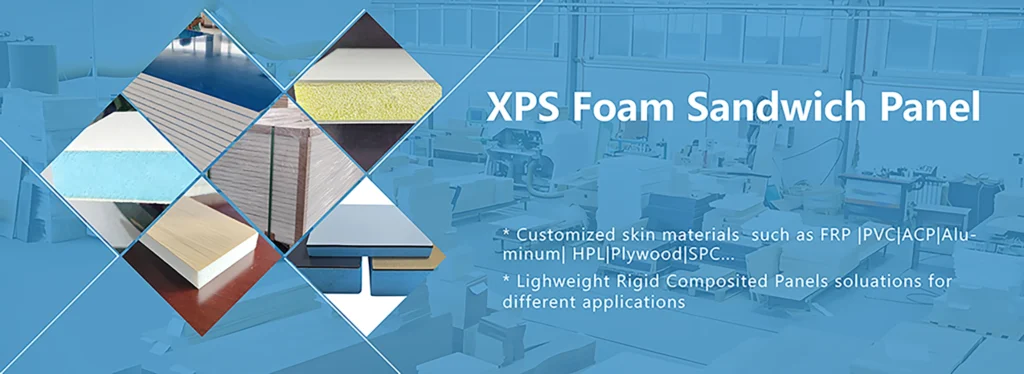
XPS foam sandwich panel supplier lightweight insulated composite panel

XPS Sandwich Panel vs PU Sandwich Panel: Cost, Thermal Performance, and Best-Fit Applications

Quick Answer for Buyers For buyers balancing cost, thermal performance, and handling, XPS sandwich panels are often chosen for moisture resistance and structural stability, while PU panels are more often evaluated where lower thermal conductivity is the top buying driver. Short answer: PU sandwich panels usually offer higher thermal insulation per thickness, while XPS sandwich

XPS Sandwich Panel vs PU Sandwich Panel: Cost, Thermal Performance, and Best-Fit Applications Read More »

High-Density Bathroom XPS Backer Board | XPS Insulation Panel - Premium Quality

How to Choose the Right Foam Backer Board Thickness for Shower Walls, Floors, and Wet Rooms

Quick Answer for Buyers The right foam backer board thickness depends on whether the project is a shower wall, floor build-up, or wet-room assembly: thinner boards help save space on walls, while thicker boards are preferred where rigidity, insulation, or system build-up matters more. Short answer: The right foam backer board thickness depends on the

How to Choose the Right Foam Backer Board Thickness for Shower Walls, Floors, and Wet Rooms Read More »

High-Density Bathroom XPS Backer Board | XPS Insulation Panel - Premium Quality

Foam Backer Board vs Cement Board: Which One Fits Faster, Lighter, and More Waterproof Tile Projects?

Quick Answer for Buyers For buyers comparing installation speed and waterproofing, foam backer board usually fits faster tile projects because it is lighter, easier to cut, and inherently water resistant, while cement board remains heavier and slower to handle on wet-room jobs. Short answer: For most commercial wet-room, modular bathroom, and tile-ready wall assemblies, a

Foam Backer Board vs Cement Board: Which One Fits Faster, Lighter, and More Waterproof Tile Projects? Read More »

XPS tile backer board manufacturer waterproof construction panel

Comparing XPS, EPS, and PIR Insulation Boards for Floor Heating

Choosing the Right Insulation for Underfloor Heating When installing underfloor heating, insulation is critical to ensure heat travels upwards into the room rather than downwards into the subfloor. Three of the most common types of rigid foam insulation used are XPS (Extruded Polystyrene), EPS (Expanded Polystyrene), and PIR (Polyisocyanurate). Understanding the differences between them is

Comparing XPS, EPS, and PIR Insulation Boards for Floor Heating Read More »

Xps Foam Sandwich Panels Scaled - Banarta Manufacturer

How XPS Sandwich Panels Reduce Installation Time in Prefabricated Cold Room and Partition Systems

Installation speed has become a strategic purchasing factor in prefabricated construction. In cold room projects, temporary utility structures, and insulated internal partitions, buyers no longer compare panels only by thickness and price. They also compare how quickly a system can be assembled, how much labor coordination it requires, and how reliably it arrives on site

How XPS Sandwich Panels Reduce Installation Time in Prefabricated Cold Room and Partition Systems Read More »

Scroll to Top